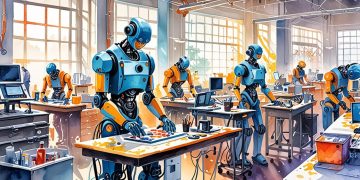
The Impact of Automation on Job Displacement and Cultural Anxiety

The Impact of Automation on Employment
In recent years, automation has transformed various sectors, ushering in an era of efficiency and innovation. Automated systems and artificial intelligence have become vital tools to enhance productivity in industries ranging from manufacturing to customer service. While this shift has led to streamlined operations and cost savings for businesses, the workforce is left grappling with significant changes. The pressing question arises: what does this mean for the future of human employment?
Job displacement is a reality that impacts millions of individuals across the United States. As businesses increasingly integrate technology, many traditional roles are vanishing, and common concerns include:
- Loss of traditional jobs: Jobs once performed by humans are now handled by robots and AI. For instance, assembly line workers in automobile factories are seeing their roles diminished as robotic arms efficiently manage assembly tasks, resulting in fewer manual positions. Similarly, in retail, cashier positions are declining due to self-checkout systems.
- Shifts in skill requirements: The demand for tech-savvy skills is rising, leaving many workers behind. Workers are often required to reskill or upskill, pivoting toward technology-driven roles. For example, a warehouse worker may need to learn how to operate advanced inventory management software or robotic picking systems.
- Economic uncertainty: Fluctuating job security leads to financial pressures for families. The fear of job loss fosters anxiety, as seen in many households where one income suddenly becomes unstable or nonexistent, compelling families to rethink their financial strategies.
Moreover, this technological revolution breeds cultural anxiety in communities across America. Feelings of fear and uncertainty manifest in our social fabric, affecting mental well-being and community cohesion. The pressures of an evolving job market can strain relationships and erode trust within neighborhoods, as individuals struggle to make ends meet in the face of constant change.
As we navigate this evolving landscape, it becomes essential to approach finance and employment with mindfulness. Individuals must cultivate a proactive mindset, seeking out new learning opportunities and embracing adaptability. It’s not just about adapting to change; it’s about seizing new opportunities. Upskilling through courses, workshops, and online education platforms can dramatically enhance one’s employability and ability to navigate the job market effectively.
By understanding the implications of automation, we can foster a future where individuals thrive and communities prosper. Connecting with our local resources—such as workforce development programs or community colleges—can provide the support needed to transition through these changes. With determination and a commitment to lifelong learning, we can build a robust workforce prepared for the challenges and opportunities that automation presents.
CHECK OUT: Click here to explore more
Understanding Job Displacement in the Age of Automation
The advent of automation brings a double-edged sword to the workforce. While innovation fosters efficiency, it also instigates significant job displacement, creating an urgent need for individuals and communities to adapt. Job displacement due to automation affects workers across various demographics. White-collar professionals, blue-collar laborers, and service industry employees all face the specter of redundancy as automated systems take over tasks once performed by humans.
In the manufacturing sector, for example, automation has revolutionized production lines. With the introduction of robotic technology, tasks previously performed by assembly workers are now executed with heightened precision and speed. This transition has led to a pronounced decline in available manual labor positions. A worker who has dedicated years to honing their skills may suddenly find their role outdated, leading to feelings of disillusionment and fear.
- Service Industry Strain: The service sector has not been immune to change either. Fast food restaurants have adopted kiosks for ordering, while grocery stores deploy self-checkout machines, effectively reducing the need for cashiers. These changes are not just statistics; they represent real people navigating unfamiliar career landscapes.
- Impact on Low-Skilled Workers: Automation disproportionately affects low-skilled workers who may not have the resources or opportunities to retrain. Workers in these positions, often juggling multiple jobs to support families, might find it impossible to devote time to acquiring new skills, raising pressing concerns about their employability.
- Rising Job Polarization: As automation becomes more prevalent, there is an increasing polarization of the job market. High-skilled roles tend to flourish in this new environment, while low and mid-skilled jobs are becoming increasingly scarce, exacerbating income inequality.
Beyond the immediate implications for employment, this transition invites a wave of cultural anxiety throughout society. Communities once built on stable work environments now face the unsettling prospect of instability. Social structures grounded in traditional employment are under strain, leading to a pervasive sense of uncertainty. This anxiety can be particularly palpable in regions reliant on industries facing significant automation, such as manufacturing hubs like Detroit or the coal mining areas in Appalachia.
In these settings, individuals often grapple not only with finding a new job but also with the emotional toll that comes with job loss. The fear of obsolescence can erode not just financial security, but also self-esteem and overall life satisfaction. Conversations about the future become laced with wariness, as families debate the feasibility of careers that were once considered safe and stable.
In light of these challenges, it’s essential for workers to embrace a proactive approach to their careers. Investing in education and training can transform apprehension into empowerment. By engaging with community resources such as vocational training programs and online learning platforms, individuals can improve their skill sets, positioning themselves as competitive candidates in an evolving job market.
This proactive mindset is not merely about survival; it’s about thriving in a landscape that demands adaptability and innovation. As communities rally around this shared goal, the potential for resilience and collective growth becomes more tangible than ever.
CHECK OUT: Click here to explore more
Navigating the Cultural Shifts and Economic Opportunities
As job displacement due to automation unfolds, the landscape of work is changing in ways that influence not only individual livelihoods but also larger cultural narratives within society. Shifting cultural values are emerging in response to the realities of automation. There is an increasing emphasis on adaptability, creativity, and emotional intelligence—skills that machines cannot easily replicate. With this shift comes the potential for workers to redefine their futures beyond traditional roles.
The integration of automation can also foster an entrepreneurial spirit. As people face job displacement, many are finding the motivation to start their own businesses or engage in freelance work. This wave of entrepreneurship not only provides new avenues for employment, but it also encourages innovation. In a bustling city like San Francisco, countless tech startups have emerged from individuals who once held stable jobs but chose to harness automation’s potential to create something new.
- Community Support Networks: The importance of establishing community support networks cannot be overstated. Local organizations can facilitate peer-to-peer mentoring, skills-sharing workshops, and collaborative projects to help displaced workers navigate their career transitions. In cities across the U.S., initiatives like community colleges offering short-term skills training are becoming invaluable resources for those seeking to adapt.
- Creating a Learning Culture: Cultivating a culture that prioritizes lifelong learning is essential. Workers must transition from viewing education as a finite phase of life to an ongoing process. The availability of online courses and resources can empower individuals to continuously upgrade their skills, applying newfound knowledge to diverse fields, from technology to healthcare.
- The Role of Policy and Legislation: As a country, the U.S. must also address job displacement through thoughtful policy and legislation. Incentives for companies investing in employee retraining programs, or tax credits for local businesses that hire displaced workers, can provide critical support to communities grappling with economic uncertainty.
The emotional toll of job displacement, especially when coupled with cultural anxiety, should not be overlooked. Individuals often experience feelings of isolation, questioning their value in a society that increasingly embraces automated solutions. It is crucial to recognize and address these feelings, promoting mental health resources within communities. Open dialogues about the emotional impacts of job loss can foster solidarity, encouraging individuals to share their experiences and strategies for coping.
As we confront the realities of automation, it is essential to embrace a collective mindset focused on resilience and renewal. Engaging in discussions about the future of work, encouraging family members and peers to explore new opportunities, and remaining open to change can cultivate a sense of empowerment rather than despair. Communities can harness the transformative potential of automation to rebuild and redefine what work means in the 21st century.
By approaching these transitions with optimism and determination, individuals and communities can transform the cultural narrative from one of anxiety and fear to one of innovation and opportunity. Each step taken towards adaptation—whether through education, entrepreneurship, or community support—can symbolize the resilience of the human spirit in the face of change.
SEE ALSO: Click here to read another article
Embracing Change: A Path Forward
The phenomenon of automation has undeniably reshaped the landscape of work, creating a ripple effect of job displacement and cultural anxiety across society. However, rather than succumbing to fear and uncertainty, we stand at the crossroads of transformation, where the potential for renewal and innovation beckons. It is essential to acknowledge that automation, while disruptive, also presents unique opportunities for growth and redefinition.
Communities, individuals, and organizations must commit to fostering a proactive approach that prioritizes adaptability and lifelong learning. Engaging in collaborative environments and promoting entrepreneurial initiatives can serve as vital pillars of support for those affected by job displacement. By instilling values that prioritize emotional intelligence and creative skill sets, we can empower the workforce to thrive in the face of technological advancement.
Moreover, policymakers must play a crucial role in orchestrating strategies that mitigate the negative impacts of automation. Investments in retraining programs and community support systems are essential to fortifying the workforce against future uncertainties. These actions will not only aid displaced workers but will also contribute to the overall resilience of our economy.
In conclusion, confronting the challenges posed by automation demands a collective resolve that transforms fear into possibility. By embracing change and fostering a culture of support and innovation, we can navigate the complex landscape of the future with confidence and hope. Each step taken towards adaptation not only enriches individual lives but also strengthens the fabric of our society, paving the way for a brighter, more inclusive future where work is a source of fulfillment and creativity.

Beatriz Johnson is a seasoned financial analyst and writer with a passion for simplifying the complexities of economics and finance. With over a decade of experience in the industry, she specializes in topics like personal finance, investment strategies, and global economic trends. Through her work on Centralismo, Beatriz empowers readers to make informed financial decisions and stay ahead in the ever-changing economic landscape.