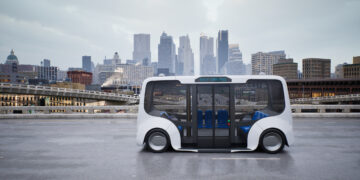
Technological Revolution in the Transport Sector and Its Impact on the American Economy.

Technological Advancements in Transportation
Innovations in transportation technology are becoming a cornerstone of economic change in the United States. These advancements are prevalent in various transport modes, fundamentally altering the mechanisms that drive economic activities. This wave of technological progress encompasses breakthroughs such as autonomous vehicles, electric cars, and sophisticated logistics and delivery systems. Collectively, these innovations offer promises of enhanced efficiency while significantly impacting the economic framework.
Key Innovations Transforming Transport
- Autonomous Vehicles: The deployment of self-driving technology is revolutionizing transportation by enhancing road safety and mitigating traffic congestion. By eliminating human error, which accounts for a substantial percentage of road accidents, autonomous vehicles are poised to decrease the overall accident rate significantly. This technology can potentially reduce insurance costs and create substantial savings in healthcare expenses due to fewer accidents.
- Electric Vehicles (EVs): The shift towards electric vehicles marks a significant change in consumer behavior and economic structures. EVs boast lower emissions and reduced operating costs compared to traditional gasoline-powered vehicles, which is influencing both environmental policies and consumer expenditures. The reduced reliance on fossil fuels is also impacting the oil markets by decreasing demand, thereby affecting the global energy trade and encouraging investments in alternative energy sources.
- Advanced Logistics Systems: The development of enhanced supply chain management tools, such as AI-driven analytics and real-time tracking, are improving delivery speed and accuracy. These advanced systems allow businesses to optimize their operations, reduce costs, and improve customer satisfaction. The logistics sector’s evolution is significantly influencing the retail landscape, particularly with the growth of e-commerce, which demands rapid and precise shipping solutions.
The economic implications of these transformations are profound. For instance, the rise of electric vehicles has led to a decline in oil demand, reshaping energy market dynamics and prompting shifts in labor markets, particularly in industries connected to traditional automotive manufacturing and fossil fuel production. This trend is prompting a re-evaluation of workforce skills, encouraging investment in training programs focused on digital and green technologies.
Furthermore, the adoption of autonomous technology is influencing new paradigms across various sectors, including insurance, infrastructure spending, and urban planning. Urban planners are now challenged to create cities that accommodate these technologies, leading to smarter, more sustainable urban landscapes.
Recent reports underscore the economic transformation driven by these technological advancements. For example, the digital freight brokerage market’s projection to grow by over 30% annually is a testament to the rapid pace at which tech-driven innovations are being integrated into the transport sector. This growth illustrates that the changes are not merely evolutionary but represent a revolutionary shift that is reshaping the economic landscape with unprecedented speed.
CHECK OUT: Click here to explore more
The Economical Ripple Effect of Innovation in Transportation
The technological revolution in the transportation sector is engendering significant ripple effects across the American economy. With these advancements, several key industries have been either disrupted or reshaped, leading to altered economic dynamics and demand patterns. This section will delve into a detailed financial analysis of the impact each innovation is having on our economy.
The adoption of autonomous vehicles is forging new pathways in the automotive industry and beyond. It is estimated that the self-driving vehicle market will grow at an impressive rate of 36% annually over the coming decade. These vehicles are expected to not only enhance safety but also introduce new business models, especially in the realm of ridesharing and goods transportation. This is a pivotal transformation, considering that the reduction in transportation costs could potentially save the U.S. economy billions annually. The financial repercussions are far-reaching: traditional automotive jobs may decline, while new opportunities for software developers and data analysts emerge. Additionally, safer roads could lead to fewer traffic-related losses, effectively boosting productivity and reducing healthcare costs.
With the increasing popularity of electric vehicles (EVs), we are witnessing a notable shift in how energy consumption is perceived within the automotive context. The substantial decrease in gasoline demand, attributed to the widespread adoption of EVs, is leading to considerable changes in the oil industry. This decline has the potential to soften oil prices, thereby benefiting American consumers who might reallocate their disposable income to other sectors. Furthermore, the EV market is fostering growth within the renewable energy sector, as more consumers and companies invest in clean energy solutions. This shift supports the development of sustainable infrastructure, demands innovative thinking from energy suppliers, and influences legislative policies geared toward environmental conservation.
- Job Market Transformation: The need for traditional automotive roles is evolving, with job profiles transforming to focus more on technology, maintenance of electric systems, and software development.
- Energy Sector Impacts: The surge in EV adoption is encouraging a reevaluation of energy strategies, with increased investment in charging infrastructure and renewable sources highlighting the need for policy adaptation.
- Financial Redirection: The savings from reduced fuel expenses are catalyzing economic growth in other areas, as both businesses and consumers channel funds into diverse industries.
As delivery systems advance with AI-enhanced logistics solutions, significant efficiency gains are being reported across supply chains. These advancements optimize route planning, reduce waste, and ensure precision in delivery estimates—a boon for e-commerce, which thrives on next-day shipping promises. The improved logistics systems offer firms a competitive edge in meeting consumer demands rapidly and efficiently. The implications for the transport sector are evident in increased demand for logistics technology, raising expectations for continued innovation and expansion “Made in America.” As these systems diverge from manual processes to more automated solutions, they drive down logistics costs, directly influencing the bottom line of retailers and enhancing overall economic productivity.
The technological revolution in transportation is not just promising efficiency but fundamentally altering the economic landscape by reshaping how industries operate and how goods are delivered and consumed. This transformation signifies a shift from labor-intensive processes to more capital-intensive industries, enabling smarter, leaner, and faster operations that promise to accelerate the economic engine of the United States.
SEE ALSO: Click here to read another article
Innovation Driven Competition and Market Dynamics
The ongoing technological revolution in transportation has unleashed a wave of competition that is redefining market dynamics across various sectors. Companies are racing to leverage technology to enhance their offerings and capture market share, leading to a surge in strategic partnerships and mergers. A profound example is the collaborative efforts between traditional automotive manufacturers and tech companies to develop cutting-edge autonomous and electric vehicle technologies. These partnerships are reshaping competitive landscapes as incumbents and new entrants vie for dominance within a rapidly evolving market.
Incorporating smart technologies into transportation solutions has led to the development of intelligent transport systems (ITS). These systems integrate traffic management, vehicle navigation, and real-time data analytics to enhance urban mobility and reduce congestion. The economic impact is substantial as smarter traffic systems increase urban efficiency, reduce fuel wastage, and decrease wear and tear on infrastructure. Boston, for instance, has invested in ITS to optimize traffic flow, resulting in significant time and cost savings for both businesses and commuters.
Moreover, the proliferation of data-driven transportation models is driving advanced analytics in the logistics sector. With access to vast amounts of data, companies can predict consumer behavior, optimize inventory levels, and personalize services. This data-centric approach not only enhances customer satisfaction but also improves profitability through better inventory turnover rates and reduced carrying costs. The logistics behemoth, FedEx, is harnessing big data analytics to forecast demand patterns and streamline operations, thereby bolstering its competitive edge in the global marketplace.
Another profound area of impact is the rise of the shared mobility economy. The emergence of ride-sharing and car-sharing platforms, facilitated by smartphone applications, is not only challenging traditional vehicle ownership models but also transforming urban transport. This shift is expected to diminish the demand for personal vehicles over the long term, leading to a realignment of the entire automotive supply chain. Companies like Uber and Lyft have capitalized on this trend, offering convenient, cost-effective alternatives to personal car use, which in turn affects market dynamics and consumer preferences.
- Strategic Alliances: Traditional manufacturers partnering with technology firms are accelerating the pace of innovation while expanding market reach.
- Urban Growth Facilitation: Cities investing in intelligent transportation systems are experiencing enhanced economic development due to more efficient infrastructure use.
- Customer-Centric Logistics: Logistics companies employing predictive analytics are achieving significant cost savings and operational efficiencies.
Additionally, the increasing reliance on drone technology for last-mile delivery is setting new benchmarks in logistics efficiency. Companies such as Amazon are pioneering drone deliveries, which promise to cut down delivery times and reduce transportation costs. The potential cost savings from drone logistics could alter the financial dynamics in the shipping and postal sectors, driving up competitive pressure and encouraging further technological investments.
The transformation driven by these technologies is creating a dynamic interplay of markets, where new services and operational models are continuously emerging. The resulting economic shifts are proving to be a critical driving force behind innovation, providing both challenges and opportunities for businesses to redefine economic growth strategies in the American landscape.
CHECK OUT: Click here to explore more
Conclusion
The technological revolution in the transport sector is unequivocally reshaping the American economy. With innovative advancements such as autonomous vehicles, smart transportation systems, and data-driven logistics, the U.S. is witnessing a paradigm shift that influences nearly every facet of its economic structure. These transformations are not only driving increased productivity and efficiency across transportation networks but are also influencing consumer behaviors and business models at an unprecedented scale.
One significant outcome of this revolution is the reduction in operational costs and the optimization of time management for businesses and consumers alike. For example, by utilizing big data analytics and automation, logistics providers can streamline their operations, leading to increased profit margins and sustained competitive advantage. Similarly, the implementation of intelligent transport systems contributes to reducing congestion and fuel consumption, thus promoting urban economic growth by maximizing infrastructural efficiency.
Moreover, the surge in shared mobility options is reshaping urban environments by decreasing the need for personal vehicles, which could result in a long-term decline in automotive manufacturing demand. This shift presents both challenges and opportunities for traditional industries and new entrants, pushing stakeholders to adapt and innovate continuously. Furthermore, drone technology in last-mile delivery is revolutionizing the logistics sector by cutting down delivery times and costs, thus reshaping supply chain dynamics.
As the transport sector continues to evolve, American businesses must strategically navigate these changes to harness the opportunities for innovation and economic growth. By embracing these new technologies and aligning their strategies accordingly, companies can not only meet the demands of a digitally-driven era but also pave the way for enhanced resilience and sustainability in the American economy.

James Carter is a financial writer and consultant with expertise in economics, personal finance, and investment strategies. With years of experience helping individuals and businesses navigate complex financial decisions, James provides practical insights and analysis. His goal is to empower readers with the knowledge they need to achieve financial success.