Investments in Agrotech: How Agricultural Technology Can Increase Productivity in the USA.
The Crucial Role of Agrotech in Enhancing U.S. Agriculture
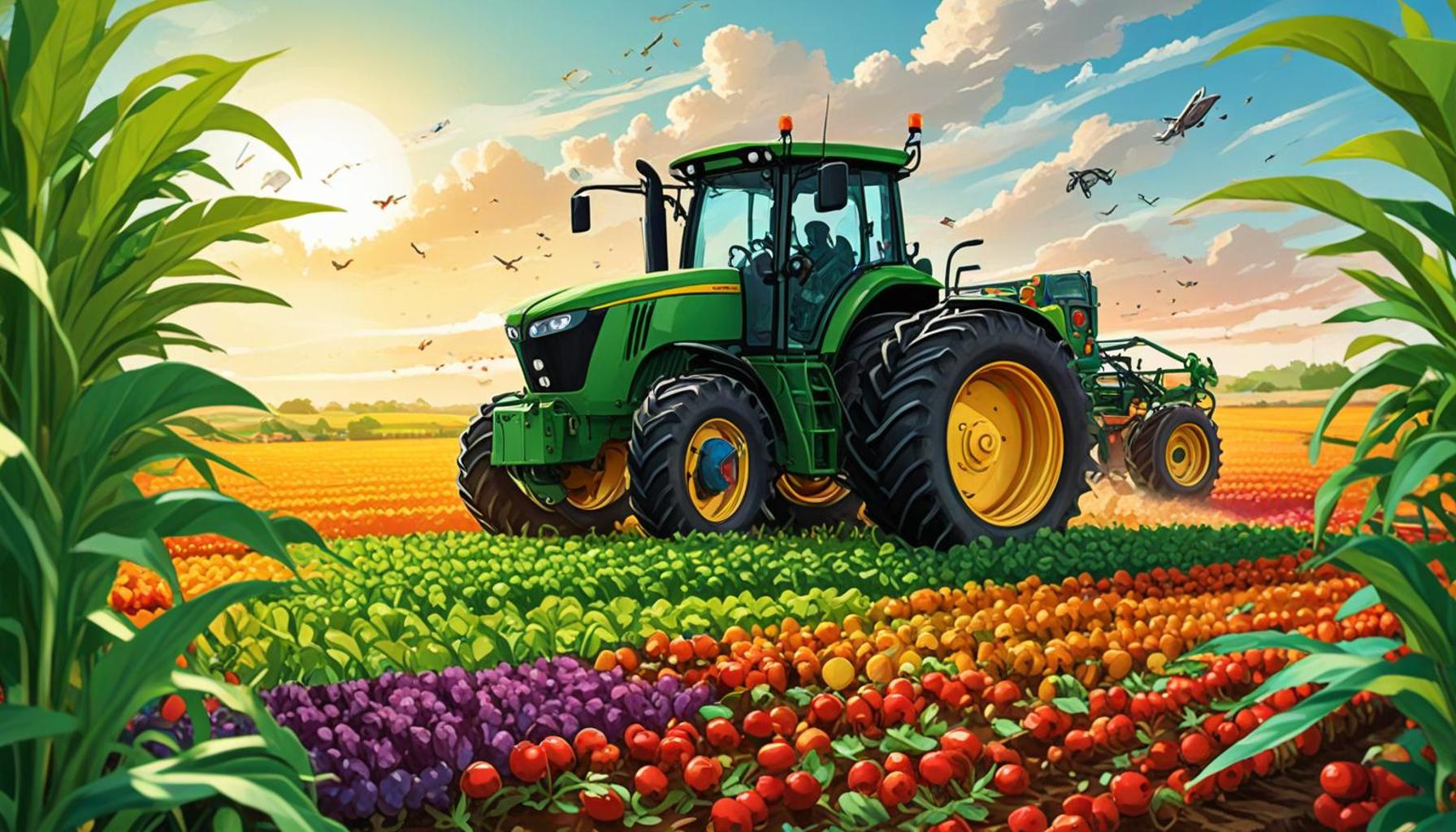
In the ever-evolving landscape of the United States economy, the agricultural sector stands as a cornerstone, generating over $1 trillion annually. However, with the dual challenges of surging global food demand and diminishing arable land, enhancing productivity is no longer optional but essential. Herein lies the transformative promise of agricultural technology, or agrotech, which is redefining farming practices by boosting efficiency and output.
Precision Agriculture: Data-Driven Decision Making
Precision agriculture represents a paradigm shift from conventional methods to data-driven decision-making processes in crop farming. By employing satellite imagery, GPS, and sensor technology, farmers can fine-tune field-level management with precision. This approach minimizes input use, such as water and fertilizers, while maximizing yield. As a result, farmers witness yield increases of up to 20% while cutting down on waste and environmental impact, thanks to enhanced resource efficiency.
Automation and Robotics: Reducing Labor Dependency
Agrotech investments are also channeling significant resources into automation and robotics, addressing labor shortages and dependency. Automation technologies streamline various farming tasks, from planting to harvesting, reducing manual labor requirements. For example, robotic harvesters can operate tirelessly, day and night, improving productivity and ultimately benefiting the economy with higher output levels.
Biotechnology: Boosting Crop Yields and Resilience
In the realm of biotechnology, agrotech plays a pivotal role in genetic modification and the development of resilient crop strains. This aspect of agriculture technology enhances crop yields and resilience by introducing traits such as drought tolerance and pest resistance. Such advancements not only secure food production amidst changing climates but also contribute to the financial stability of farming communities by ensuring reliable output.
Financial Movement in Agrotech
The financial landscape of agrotech is increasingly promising, with investments soaring as confidence builds. Notably, in 2022, U.S. agrotech ventures amassed over $4 billion in investments, as reported by AgFunder. This substantial growth compared to past years underlines the sector’s vast potential for revolutionizing productivity and fostering sustainable practices.
Sustainable Returns: Economic and Environmental Benefits
Beyond mere financial returns, investments in agrotech are synonymous with sustainable practices. Precision agriculture, for instance, offers noticeable economic benefits, augmenting crop yields by 20% on average, alongside reducing environmental footprints. As agrotech continues to evolve, it’s positioned as a critical ally for the United States in meeting both its economic aspirations and environmental responsibilities, ensuring a robust future for agriculture.
SEE ALSO: Click here to read another article
Investing in Agrotech: Catalyzing Agricultural Efficiency
As the challenges in agriculture intensify, investments in agrotech are increasingly seen as pivotal to transforming U.S. agriculture and meeting future food demands. This transformation is driven by technology that enhances efficiency, productivity, and sustainability. But what exactly makes these investments indispensable, and how are they reshaping agricultural practices?
Capitalizing on Emerging Trends
The agrotech sector is consistently evolving, presenting numerous opportunities for investors. These opportunities are centered on key emerging trends, which include:
- Digital Farming Platforms: These platforms provide real-time data analytics and decision-making tools, improving crop and farm management. With the adoption of such platforms increasing, investments here are witnessing substantial growth.
- Sustainable Farming Solutions: As sustainability becomes a priority, solutions that reduce carbon footprints and enhance biodiversity are attracting significant capital. Technologies focusing on waste reduction and efficient resource usage are particularly popular.
- Vertical Farming: This method counters the limitation of diminishing arable land by growing crops in vertically stacked layers, often indoors, using controlled-environment agriculture. Investment in this area is crucial as it provides a sustainable way to produce food in urban settings.
These trends underscore a shift towards precision, sustainability, and urban-centric agriculture, requiring substantial investment to fully realize their potential.
Financial Impacts on the Agriculture Sector
Investing in agrotech delivers multifaceted financial benefits, offering both economic growth and environmental preservation. Successful deployment of agricultural technology contributes to:
- Enhanced Crop Profitability: By leveraging technologies like precision agriculture, farmers optimize inputs, ensuring better crop health and higher yields, which in turn increases profitability.
- Cost Efficiency: Automation reduces operational costs by minimizing the reliance on human labor while simultaneously maximising productivity.
- Market Competitiveness: With the integration of agrotech tools, U.S. farmers can remain competitive in the global market by producing quality produce more efficiently and sustainably.
Moreover, these financial advancements are intricately linked to environmental gains, further making the case for robust investment in this sector.
Barriers to Adoption and Investment
Despite the clear advantages, some barriers hinder full-scale investment in and adoption of agrotech. These challenges include:
- High Initial Costs: Many small to mid-sized farms struggle with the upfront costs associated with new agrotech tools and systems, creating a reluctance to invest.
- Lack of Skilled Labor: The need for skilled personnel to operate advanced technologies is pressing, and shortages in this area can discourage investment.
- Technology Adoption Rate: A disparity between the rapid pace of technological advancement and the slower rate of adoption by traditional farmers poses a crucial hurdle. Convincing stakeholders to shift from long-established practices takes time and evidence of tangible benefits.
Understanding and mitigating these barriers is essential to unlocking the full potential of agrotech investments and maximizing their benefits for U.S. agriculture.
SEE ALSO: Click here to read another article
Emerging Technologies Driving Agrotech Investments
Agrotech investments are largely motivated by the promise of emerging technologies that are redefining what is possible within agriculture. These technologies not only promise increased productivity but also introduce smart solutions to long-standing agricultural issues. Some of the most impactful technologies include:
- Drones and Aerial Imagery: Drones provide farmers with aerial insights, allowing for detailed field analysis to identify crop issues and streamline irrigation processes. The financial implication of drone technology extends beyond productivity gains, as it lowers the costs associated with monitoring vast farm areas while delivering actionable data for precise decision-making.
- Genetically Edited Crops: Through technologies like CRISPR, crops can be modified to be more resistant to pests and diseases, reducing the need for chemical applications. This biotechnological advance not only ensures higher yields but also supports sustainable practices, appealing to environmentally conscious markets and potentially commanding premium prices.
- Internet of Things (IoT) in Agriculture: IoT devices monitor everything from soil moisture levels to climate conditions. This technology empowers farmers with real-time data, facilitating proactive farm management and resource optimization. Consequently, it significantly curtails waste and ensures crops are grown with the utmost efficiency, thereby enhancing profitability.
Strategic Investment Considerations
Understanding the differential impact of technology across various agricultural environments is key to strategic investment decision-making. Considerations include:
Region-Specific Applications: Investment strategies must consider the geographic variability of U.S. agriculture. For instance, precision agriculture practices might yield better returns in the Midwest’s expansive corn and soybean farms, while vertical farming technologies may be more suitable for urban centers like New York or San Francisco.
Climate Change Resilience: As climate change introduces more volatility into agricultural outputs, technology investments that focus on resilience—such as drought-resistant seeds and climate-controlled growing systems—may emerge as particularly viable. These investments safeguard against climate risks, ensuring stable food production amidst weather unpredictability.
Scale and Infrastructure: The scale of farming operations significantly affects how technology is adopted. Large-scale farms may have the capital to invest in high-tech solutions across broader acreages, offering economies of scale. However, smallholder farms might benefit from collaborative investments in shared technology resources, potentially through cooperatives or partnerships.
Maximizing Returns through Agrotech Synergies
Successful agrotech investment hinges on creating synergy between different technologies. A holistic approach can be more effective than isolated investments, as illustrated by:
- Integration of Data Platforms and IoT: Combining real-time data platforms with IoT sensors accelerates decision-making by providing comprehensive insights into farm operations, ensuring that every drop of water and ounce of fertilizer is optimally utilized.
- Synergistic Use of Drones and Genetic Innovations: Utilizing drones to monitor the performance of genetically edited crops helps validate genetic enhancements in real-time, providing valuable data that drives future improvements and investment confidence.
Thus, the next phase of agricultural productivity is not solely about adopting individual technologies, but rather about synergistically integrating multiple technologies to fully leverage their potential. This approach promises not only heightened productivity but also a profound transformation of the agricultural landscape in the United States, ensuring both economic viability and sustainability.
CHECK OUT: Click here to explore more
Final Thoughts on Agrotech Investments
Investments in agrotech represent a groundbreaking opportunity to enhance productivity and sustainability across the agricultural sector in the United States. By strategically integrating technologies like drones, genetically edited crops, and the Internet of Things (IoT), the agriculture industry can address historical challenges and usher in a new era of efficiency and resilience.
The potential of these technologies is bolstered by their ability to cater to specific regional and operational needs, making them highly adaptable to the varied climatic and geographical conditions of the U.S. This adaptability is particularly crucial as farmers face increasing climate unpredictability. By investing in resilient technologies such as climate-controlled growing systems, stakeholders can diminish the risk posed by environmental volatility, thus securing more stable returns on their investments.
Moreover, the concept of synergy should be at the forefront of agrotech strategies. The integration of diverse technologies can lead to compounding effects on productivity, reducing waste and optimizing resource use. This integrated approach not only enhances the technological value but also opens doors for innovative business models and collaborations, whether through cooperatives for small-scale farms or large-scale implementation across considerable acreages.
In conclusion, as technological advancements continue to accelerate, the potential returns from well-placed investments in agrotech are substantial. By focusing on synergy, regional specificity, and climate resilience, the United States can position its agricultural sector as a global leader in technological adoption, ensuring economic viability and food security for the future.

James Carter is a financial writer and consultant with expertise in economics, personal finance, and investment strategies. With years of experience helping individuals and businesses navigate complex financial decisions, James provides practical insights and analysis. His goal is to empower readers with the knowledge they need to achieve financial success.