
Investments in Water Infrastructure in the USA: Opportunities in the Water Resources Sector.
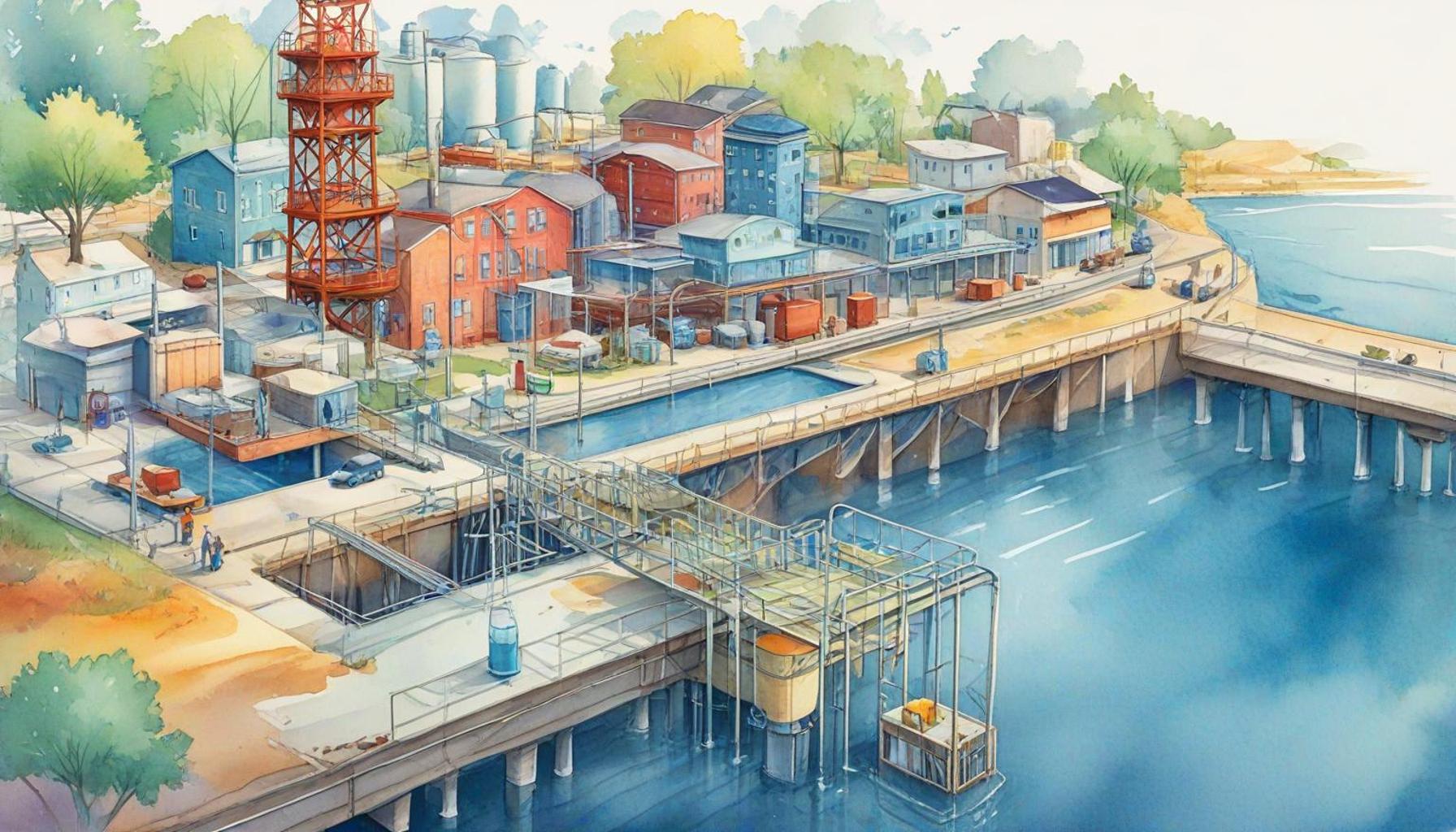
The United States faces significant challenges with its water infrastructure, much of which was built decades if not centuries ago. These systems are vital for supplying clean drinking water, managing waste, and supporting the nation’s ecosystem. Over time, corrosion, material fatigue, and increasing demand have led to frequent breakdowns and water quality issues, prompting estimates that suggest tens of billions of dollars are needed annually just to maintain, let alone upgrade, these systems. As such, there is a growing recognition of the importance of investing in this sector. Investments in water infrastructure can foster economic growth by creating jobs, ensuring sustainable water management, improving efficiency, and avoiding costly outages. Moreover, new infrastructure can enhance environmental sustainability by incorporating green technologies and practices, such as the use of renewable energy for water treatment and implementation of nature-based solutions.
Key Drivers for Investment
Several factors contribute to the attractiveness of the water infrastructure sector. First, government initiatives are playing a pivotal role. Programs like the Water Infrastructure Finance and Innovation Act (WIFIA) and state-specific grants provide significant funding for rebuilding this crucial sector. These initiatives not only inject capital but also motivate private sector interest by reducing risk.
Second, the industry has witnessed technological advancements that have transformed water management. Smart meters, advanced filtration technologies, and IoT-based systems offer innovative solutions that improve efficiency while reducing costs. These tools help detect leaks, manage water distribution more effectively, and provide real-time data for better decision-making.
Finally, environmental necessity is a major driver. Climate change has brought about unpredictable weather patterns, increasing the need for resilient infrastructure. Investing in robust water systems that can withstand floods, droughts, or hurricanes is not merely ideal but essential for safeguarding resources and communities.
Potential Investment Vehicles
Investors looking to delve into the water infrastructure sector have several options. Municipal bonds represent a traditional yet highly stable investment route, providing funds for projects while offering tax advantages to investors. These bonds appeal to those seeking long-term, low-risk investments.
Another avenue is through public-private partnership (PPP) models, which balance financial input and operational oversight between public authorities and private entities. This not only distributes risk more evenly but also often results in more efficient project execution and cost management.
Furthermore, equity funds targeted at water technology offer a dynamic investment opportunity. These funds pool resources to invest in evolving technologies in water purification, distribution, and conservation. As demand for sustainable and efficient water solutions rises, these funds have the potential for significant returns.
Ultimately, identifying the appropriate investment vehicle requires in-depth financial analysis and scenario comparisons. Understanding potential returns, risks, and the social impact of investments is essential. By leveraging data and conducting comprehensive research, investors can make informed decisions that align with their financial goals and contribute positively to sustainable water management initiatives.
CHECK OUT: Click here to explore more
Understanding Water Infrastructure Investments
Investing in the water infrastructure sector requires meticulous financial analysis due to its inherent complexities. It is essential for investors to grasp the dynamics of the sector, which include unique market conditions, regulatory environments, and technological innovations. This analysis must consider the intersection of macroeconomic factors, such as changes in interest rates, inflation, and economic growth, with project-specific parameters like geographical location, project size, and stakeholder involvement. When investors overlook these critical aspects, they risk underestimating the sector’s challenges and overestimating potential returns.
One of the primary elements of financial analysis in this domain is the creditworthiness evaluation of the project stakeholders. This is especially crucial in situations involving municipal bonds or public-private partnerships, where public entities play a significant role. Credit ratings from reputable agencies like Moody’s or Standard & Poor’s are vital as they provide insight into financial stability and the probability of default. For example, a municipal bond with a high credit rating indicates that the local government is financially stable, albeit offering typically lower yields. This trade-off suits conservative investors who prioritize capital preservation over high returns.
Furthermore, the analysis of historical and forecasted data is indispensable. Investors need to examine past and emerging trends in water usage patterns, demographic shifts, and changes in legislation. For instance, areas witnessing rapid population growth may experience increased water demand, thus drawing attention to investment opportunities. Conversely, regions with declining populations might face reduced demand, posing potential investment risks. Similarly, staying informed about regulatory developments is critical. Legislation aimed at water conservation or new environmental standards can significantly impact the profitability of water projects.
Cost and Technological Considerations
Financial analysis must also incorporate a detailed review of both Capital Expenditure (CapEx) and Operational Expenditure (OpEx). Water infrastructure projects often necessitate substantial upfront capital investments, particularly those involving innovative and sustainable technologies. While these projects may incur higher initial costs, they offer advantages such as long-term operational savings and lower compliance-related issues. Adopting cutting-edge technology can differentiate a project as an industry leader, but it requires careful evaluation of the associated financial risks and benefits.
- Market Liquidity: Investments in water infrastructure typically require longer commitment periods. Therefore, assessing the liquidity of these investments is crucial for maintaining flexibility and meeting any sudden cash flow requirements.
- Regulatory Impact: Federal, state, and local regulations significantly affect water projects. Understanding these laws helps investors ensure compliance and anticipate shifts that may influence future profitability.
- Environmental Considerations: Projects that emphasize ecological sustainability not only contribute positively to the environment but might also be privy to tax benefits and governmental incentives. Hence, weighing ecological benefits against potential costs is a key component of investment strategy.
Ultimately, crafting an effective investment strategy in the water infrastructure sector demands a well-rounded analysis. Investors must balance their financial goals with the societal and environmental impacts of their investments. By diligently assessing each aspect, investors can mitigate risks and position themselves to achieve maximal returns, making a meaningful contribution to one of the nation’s most critical infrastructure needs.
SEE ALSO: Click here to read another article
Exploring Investment Vehicles and Opportunities
In the rapidly evolving landscape of water infrastructure, investors are presented with a variety of investment vehicles. Each option comes with its distinct risk-return profile, requiring thorough evaluation to align with specific investment objectives. The most prevalent investment mechanisms include municipal bonds, public-private partnerships (PPPs), and equity investments in publicly traded utility companies or infrastructure-focused funds. These investment vehicles offer diverse risk management strategies and potential returns.
Municipal bonds remain a favored choice among investors prioritizing tax-exempt income and lower risk exposure. These bonds are typically issued by local governments to fund water-related infrastructure projects such as wastewater treatment facilities, pipelines, and desalination plants. The generally low risk associated with municipal bonds, coupled with their tax advantages, makes them attractive to conservative investors seeking stable income streams. However, given their lower yield in comparison to more volatile investment options, aspiring investors must understand the trade-offs between safety and growth potential.
On the other hand, public-private partnerships (PPPs) serve as robust vehicles for combining governmental oversight with private sector efficiency. By leveraging the strengths of both public and private entities, PPPs allow for the distribution of risks while enhancing the quality and efficiency of project execution. These partnerships can involve long-term contracts where private firms invest in, design, and maintain critical water infrastructure. Investors in PPPs must cautiously assess contract terms, payout structures, and potential exit strategies, considering factors such as operational costs and eventual revenue streams. Successful PPPs often deliver attractive returns by harnessing private sector innovation within a structured regulatory framework.
Additionally, equity investment in water utility companies, exchange-traded funds (ETFs), or dedicated infrastructure funds offers an opportunity to benefit from economic trends driving the water sector. Publicly traded water utilities, which are regulated at state and federal levels, often provide stable dividends due to their monopolistic market positions. However, investors need to analyze market volatility, regulatory risks, and profit margins. For those seeking broader exposure, infrastructure-focused ETFs offer diversification across different water projects and geographies, thereby spreading investment risks while capturing growth opportunities.
Technological Innovations and Emerging Opportunities
The future of water infrastructure investments is intrinsically linked to technological advancements. Innovations in water treatment, desalination, and conservation technologies are rapidly altering the sector’s landscape, presenting new investment opportunities. Smart water management systems, which leverage AI and IoT technologies, optimize the use of resources by enhancing monitoring and leak detection, thereby reducing water wastage. Investment in companies developing these technologies could provide substantial returns as the demand for efficiency grows.
Moreover, desalination technologies have gained traction as solutions to water scarcity issues, particularly in arid regions. While desalination plants require significant capital and operational expenditures, advances in technology have made processes more energy-efficient and economically viable. As water scarcity remains a pressing global challenge, strategic investments in desalination can offer transformative opportunities.
Finally, with increasing regulatory emphasis on sustainable and green practices, there is a burgeoning market for water reuse and recycling initiatives. Projects that focus on reclaimed water for industrial uses not only offer significant environmental benefits but may also tap into federal and state incentives aimed at promoting sustainable practices. While assessing such opportunities, investors should weigh up ecological benefits against capital costs and potential revenue models.
The complexity and scale of the water resources sector present a wealth of opportunities for informed investors. By leveraging a mix of traditional and innovative investment approaches, investors can craft diversified portfolios that cater to both financial ambitions and the growing demand for sustainable water solutions.
CHECK OUT: Click here to explore more
Conclusion
In summary, the landscape of water infrastructure investments in the United States presents a multifaceted array of opportunities for astute investors. With the combination of municipal bonds, public-private partnerships (PPPs), and equity investments, investors can strategically navigate through various risk-return profiles to align with their financial goals. Each investment vehicle presents its unique advantages, from the tax-exempt income and reduced risk offered by municipal bonds to the efficiency and innovation brought by PPPs and equity participations in robust water utility sectors.
As technological advancements revolutionize the industry, opportunities extend beyond conventional investment routes, especially with the development of smart water management systems, desalination technologies, and sustainable practices. These innovations cater to a burgeoning demand for efficiency and environmental responsibility, offering remarkable growth prospects to those willing to embrace change.
Moreover, the spotlight on sustainability and eco-friendliness reinforces the critical role water infrastructure investments will play in the future. As government incentives and regulatory frameworks encourage resource conservation and waste reduction, investors are uniquely positioned to benefit financially while contributing positively to environmental efforts.
Ultimately, the convergence of conventional financial mechanisms and cutting-edge technology paves the way for a diversified and resilient investment portfolio. Investors who carefully assess the balance between risk tolerance and growth prospects can seize these opportunities to not only achieve financial returns but also support critical infrastructure developments that drive societal progress. In a world where water resources are increasingly pivotal, the American water infrastructure sector holds immense potential for transformation and value creation.